


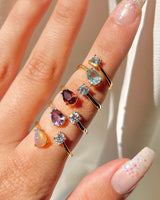


The short answer is no. You should take your opal jewelry off before you shower. But the longer answer is worth understanding, because it isn't just about water. It's about the specific way opals are structured, and why a gemstone that already contains water can still be damaged by it.
Key Takeaways
✨ Opals should be removed before showering, swimming, washing dishes, or any prolonged water exposure.
✨ Shower soaps, shampoos, and conditioners leave residues that dull an opal's play-of-color over time.
✨ Sudden temperature changes, like stepping into a hot shower wearing a cold ring, can cause thermal shock and internal cracking.
✨ Opal doublets and triplets are significantly more vulnerable to water damage than solid opals.
✨ Ethiopian opals absorb water differently than Australian opals and are especially sensitive to prolonged exposure.
✨ A stable environment with consistent humidity, moderate temperature, and no direct heat is the best long-term protection for any opal piece.
Why Opals and Water Don't Mix Well
Opals are unlike almost every other gemstone you'll wear. They're not crystalline minerals. They're a hardened silica gel, and they naturally contain water within their structure. That water content is part of what creates play-of-color, the signature shifting light that makes opals so visually striking.
That internal moisture sounds like it would make water exposure harmless. It doesn't. The problem is that when an opal is repeatedly exposed to liquid water, especially warm water, it can absorb more than it needs. As the opal wets and dries through repeated cycles, the internal stress builds. Over time, this leads to crazing: a fine network of internal cracks that clouds the stone and permanently disrupts the play-of-color. Crazing is almost always irreversible.
Shower water isn't just water, either. Soaps, shampoos, conditioners, and body washes leave residues on gemstones that are difficult to remove and gradually dull the surface. Harsh chemicals in some products can also affect both the stone and the metal setting, weakening prong integrity over time.
And then there's temperature. Hot running water can cause sudden temperature changes that lead to thermal shock in an opal, particularly if the stone is cold when it enters the heat.
Solid Opals vs. Doublets and Triplets
Not all opal jewelry behaves the same way in water, and the biggest factor is whether the stone is a solid opal or a composite.

Solid opals are cut from a single piece of natural opal. They're more durable in the sense that there's nothing to delaminate or separate. They can still be damaged by prolonged water exposure and harsh chemicals, but the risk of catastrophic water damage is lower.
Opal doublets are thin slices of natural opal bonded to a dark backing material, usually black potch or ironstone, with adhesive. The backing enhances the play-of-color by providing contrast. When water seeps between the layers, it can cloud the stone from the inside or dissolve the glue entirely, causing the layers to separate. Once a doublet delaminates, the damage is permanent.
Opal triplets add a third layer, a clear dome of glass or quartz, over the top of the opal slice. They're even more sensitive to water than doublets because water can seep into both the top and base junctions. The clear cap can fog, and the layers can separate just the same.
If your opal jewelry is set in sterling silver at a lower price point, there's a reasonable chance it contains a doublet or triplet rather than a solid opal. When water protection matters, knowing which type you own is essential. Our opal jewelry uses solid natural opal stones.
Ethiopian Opal vs. Australian Opals
These two opal origins behave very differently when it comes to water, and it's worth knowing which one you have.

Australian opals, particularly those from Coober Pedy and Lightning Ridge, are formed in a sedimentary environment and tend to have a more stable, lower water content. They're still sensitive to the issues described above, but they generally handle humidity fluctuations better than Ethiopian opals.
Ethiopian opals are hydrophane opals, meaning they're highly porous and actively absorb water. A hydrophane opal placed in water will visibly change: it may turn transparent or shift color as the water fills the stone's pores. This sounds harmless, but it's not. When the water evaporates out, it can cause internal stress. Repeated wet-dry cycles create micro-fractures and can dull or permanently alter the play-of-color.
For Ethiopian opal jewelry specifically, even brief shower exposure is riskier than it would be for Australian opal pieces. The stone absorbs moisture faster and releases it in ways that stress the structure.
Other Situations to Avoid
The shower gets the most attention, but water exposure risks don't stop there.
Swimming, both pools and the ocean, is a firm no. Chlorine is a harsh chemical that can damage both the opal surface and the metal setting. Saltwater is abrasive and corrosive. And the prolonged exposure involved in any swim is far worse than a shower.
Hot tubs and steam rooms combine heat, chemical agents, and high humidity in ways that hit several opal vulnerabilities simultaneously. The steam alone can introduce sudden temperature changes and moisture seepage.
Washing dishes puts opal rings in direct contact with hot water, dish soap, and hard surfaces. Opals sit at around 5.5 to 6.5 on the Mohs scale, making them softer than most gemstones like sapphires or diamonds. Contact with a hard surface, even briefly, can cause scratches. If you tend to wear birthstone rings stacked together, it's worth noting that harder stones in the same stack can scratch an opal over time too.
Lotions, perfumes, and oils should be applied before jewelry goes on, not after. These products leave residues that build up on opal surfaces and in jewelry settings, dulling the stone's brilliance over time.
Sporting activities introduce sweat, impact, and the risk of dropping the piece on a hard surface. An opal ring is not an appropriate choice for the gym.
Simple Habits That Protect Your Opal
Most opal damage is gradual and preventable. A few consistent habits make a significant difference:
-
Take opal jewelry off before showering, swimming, washing up, or applying skincare products.
-
Put it on last when getting dressed, after lotions, perfume, and hairspray have dried.
-
Wipe it gently with a soft, damp cloth after wearing to remove skin oils and residue, then let it air dry before storing.
-
Store it separately from harder gemstones that could scratch the surface, and keep it away from direct sunlight or heat vents.
-
Whether you wear a single opal ring, a birthstone bracelet, or layer it with pieces from a birthstone jewelry collection, the same rules apply: off before water, on after everything else.
These aren't complicated rules. They're just habits that make the difference between opal jewelry that looks stunning for decades and a piece that develops crazing or dullness within a few years.
Frequently Asked Questions
Can I wear my opal ring while washing my hands?
Occasional, brief hand washing is lower risk than a shower, but it's still not ideal, especially for opal doublets or triplets, where even short water exposure can eventually work its way into the adhesive layer. If you wear an opal ring daily, develop the habit of removing it before any sink use.
Can water restore an opal that looks dull?
Sometimes a very dry opal will temporarily brighten when it contacts water, which makes it seem like water is good for it. It isn't. That effect is temporary, and the wet-dry cycle is exactly what causes long-term stress.
Does humidity damage opals?
Excessive humidity isn't ideal, but very low humidity is actually the bigger risk for most wearers. The concern is stability, not a specific humidity level. Avoid dramatic swings in either direction.
Are Ethiopian opals more delicate than Australian opals?
Yes, in the context of water exposure. Ethiopian opals are hydrophane, meaning they actively absorb water through their porous structure. Australian opals are generally more stable. Both should be kept away from prolonged water exposure, but Ethiopian opal jewelry requires extra caution.
Can I clean my opal jewelry with water?
A quick wipe with a soft damp cloth is fine for surface dust and oils. Avoid soaking, steam, ultrasonic cleaning, and any chemical cleaning agents. For a full walkthrough, see our guide on How to Clean Opal Jewelry.
How do I know if my opal is a doublet or solid?
Look at the stone from the side. A doublet will show a visible seam between the opal layer and the dark backing material. Solid opals have consistent coloring throughout. If you're unsure, ask the seller or jeweler before exposing the piece to any water.
30 comments
Dr Agbomian Sunday how he helped people to get pregnant and also help people to cure HERPES with his herbal medicine, so i decided to give him a try. I am here today to give my own testimony on how this great man helped me to cure my HSV 1&2 Disease and also helped my sister to get pregnant, i just told him and he said he was going to work on it miraculously and in a short period of time i was lifted from these terrible disease. And it took my sister just a week to get pregnant after he was done. Contact this great man and he will help you no matter the problem you are facing. You can Email him at Dragbomianherbalcured77@gmail.com or call/text him +2349153314157
https://jumperads.com/mecca/anti-insects-company-mecca.html شركة مكافحة حشرات بمكة
https://jumperads.com/mecca/water-leaks-detection-company-mecca.html شركة كشف تسربات بمكة
https://jumperads.com/mecca/mecca-company-surfaces.html شركة عزل اسطح بمكة
https://jumperads.com/mecca/mecca-company-sewage.html شركة تسليك مجاري بمكة
https://jumperads.com/mecca/mecca-cleaning-company-sofa.html شركة تنظيف كنب بمكة
https://jumperads.com/mecca/mecca-cleaning-company-mosques.html شركة تنظيف مساجد بمكة
https://jumperads.com/mecca/mecca-cleaning-company-Carpet.html شركة تنظيف سجاد بمكة
https://jumperads.com/mecca/mecca-cleaning-company-tanks.html شركة تنظيف خزانات بمكة
https://jumperads.com/mecca/mecca-cleaning-company-swimming-bath.html شركة تنظيف وصيانة مسابح بمكة
https://jumperads.com/mecca/mecca-cleaning-company-Furniture.html شركة تنظيف الاثاث بمكة
https://jumperads.com/mecca/mecca-cleaning-company-home.html شركة تنظيف شقق بمكة
https://jumperads.com/mecca/mecca-cleaning-company-Carpets.html شركة تنظيف موكيت بمكة
https://jumperads.com/mecca/mecca-cleaning-company.html شركة تنظيف مجالس بمكة
https://jumperads.com/mecca/mecca-cleaning-company-house.html شركة تنظيف منازل بمكة
https://jumperads.com/mecca/mecca-cleaning-company-curtains.html شركة تنظيف ستائر بمكة
https://jumperads.com/mecca/mecca-cleaning-company-Villas.html شركة تنظيف فلل بمكة
https://jumperads.com/mecca/mecca-company-tile.html شركة جلي بلاط بمكة
https://jumperads.com/jubail/anti-insects-company-jubail.html شركة مكافحة حشرات بالجبيل
https://jumperads.com/jubail/water-leaks-detection-company-jubail.html شركة كشف تسربات بالجبيل
https://jumperads.com/jubail/jubail-company-surfaces.html شركة عزل اسطح بالجبيل
https://jumperads.com/jubail/jubail-company-sewage.html شركة تسليك مجاري بالجبيل
https://jumperads.com/jubail/jubail-cleaning-company-sofa.html شركة تنظيف كنب بالجبيل
https://jumperads.com/jubail/jubail-cleaning-company-mosques.html شركة تنظيف مساجد بالجبيل
https://jumperads.com/jubail/jubail-cleaning-company-Carpet.html شركة تنظيف سجاد بالجبيل
https://jumperads.com/jubail/jubail-cleaning-company-tanks.html شركة تنظيف خزانات بالجبيل
https://jumperads.com/jubail/jubail-cleaning-company-swimming-bath.html شركة تنظيف وصيانة مسابح بالجبيل
https://jumperads.com/jubail/jubail-cleaning-company-Furniture.html شركة تنظيف الاثاث بالجبيل
https://jumperads.com/jubail/jubail-cleaning-company-home.html شركة تنظيف شقق بالجبيل
https://jumperads.com/jubail/jubail-cleaning-company-Carpets.html شركة تنظيف موكيت بالجبيل
https://jumperads.com/jubail/jubail-cleaning-company.html شركة تنظيف مجالس بالجبيل
https://jumperads.com/jubail/jubail-cleaning-company-house.html شركة تنظيف منازل بالجبيل
https://jumperads.com/jubail/jubail-cleaning-company-curtains.html شركة تنظيف ستائر بالجبيل
https://jumperads.com/jubail/jubail-cleaning-company-Villas.html شركة تنظيف فلل بالجبيل
https://jumperads.com/jubail/jubail-company-tile.html شركة جلي بلاط بالجبيل
https://jumperads.com/yanbu/anti-insects-company-yanbu.html شركة مكافحة حشرات بينبع
httsp://jumperads.com/yanbu/water-leaks-detection-company-yanbu.html شركة كشف تسربات بينبع
https://jumperads.com/yanbu/yanbu-company-surfaces.html شركة عزل اسطح بينبع
https://jumperads.com/yanbu/yanbu-company-sewage.html شركة تسليك مجاري بينبع
https://jumperads.com/yanbu/yanbu-cleaning-company-sofa.html شركة تنظيف كنب بينبع
https://jumperads.com/yanbu/yanbu-cleaning-company-mosques.html شركة تنظيف مساجد بينبع
https://jumperads.com/yanbu/yanbu-cleaning-company-Carpet.html شركة تنظيف سجاد بينبع
https://jumperads.com/yanbu/yanbu-cleaning-company-tanks.html شركة تنظيف خزانات بينبع
https://jumperads.com/yanbu/yanbu-cleaning-company-swimming-bath.html شركة تنظيف وصيانة مسابح بينبع
https://jumperads.com/yanbu/yanbu-cleaning-company-Furniture.html شركة تنظيف الاثاث بينبع
https://jumperads.com/yanbu/yanbu-cleaning-company-home.html شركة تنظيف شقق بينبع
https://jumperads.com/yanbu/yanbu-cleaning-company-Carpets.html شركة تنظيف موكيت بينبع
https://jumperads.com/yanbu/yanbu-cleaning-company.html شركة تنظيف مجالس بينبع
https://jumperads.com/yanbu/yanbu-cleaning-company-house.html شركة تنظيف منازل بينبع
https://jumperads.com/yanbu/yanbu-cleaning-company-Villas.html شركة تنظيف فلل بينبع
https://jumperads.com/yanbu/yanbu-cleaning-company-curtains.html شركة تنظيف ستائر بينبع
https://jumperads.com/yanbu/yanbu-company-tile.html شركة جلي بلاط بينبع
https://jumperads.com/abha/anti-insects-company-abha.html شركة مكافحة حشرات بابها
https://jumperads.com/abha/water-leaks-detection-company-abha.html شركة كشف تسربات بابها
https://jumperads.com/abha/abha-company-surfaces.html شركة عزل اسطح بابها
https://jumperads.com/abha/abha-company-sewage.html شركة تسليك مجاري بابها
https://jumperads.com/abha/abha-cleaning-company-sofa.html شركة تنظيف كنب بابها
https://jumperads.com/abha/abha-cleaning-company-mosques.html شركة تنظيف مساجد بابها
https://jumperads.com/abha/abha-cleaning-company-Carpet.html شركة تنظيف سجاد بابها
https://jumperads.com/abha/abha-cleaning-company-tanks.html شركة تنظيف خزانات بابها
https://jumperads.com/abha/abha-cleaning-company-swimming-bath.html شركة تنظيف وصيانة مسابح بابها
https://jumperads.com/abha/abha-cleaning-company-Furniture.html شركة تنظيف الاثاث بابها
https://jumperads.com/abha/abha-cleaning-company-home.html شركة تنظيف شقق بابها
https://jumperads.com/abha/abha-cleaning-company-Carpets.html شركة تنظيف موكيت بابها
https://jumperads.com/abha/abha-cleaning-company.html شركة تنظيف مجالس بابها
https://jumperads.com/abha/abha-cleaning-company-house.html شركة تنظيف منازل بابها
https://jumperads.com/abha/abha-cleaning-company-curtains.html شركة تنظيف ستائر بابها
https://jumperads.com/abha/abha-cleaning-company-Villas.html شركة تنظيف فلل بابها
https://jumperads.com/abha/abha-company-tile.html شركة جلي بلاط بابها